
The best forex signals in 2026: six providers and Systemly, compared field by field
 Systemly Team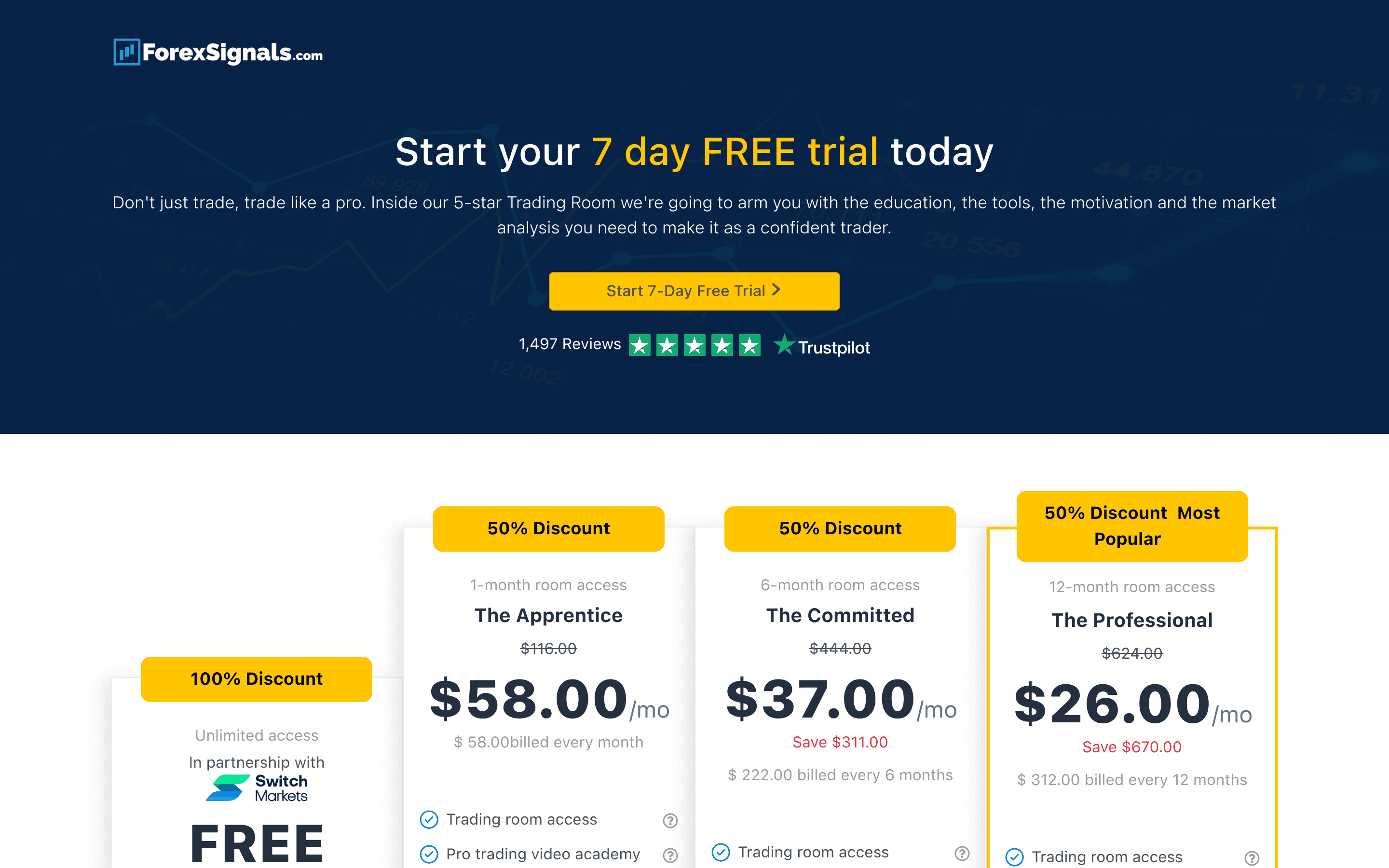
Open the pricing pages of a few signal sellers in separate tabs and the first thing you notice is not the price. It is the percentage. One page promises a "76% success rate". Another claims "80 to 95%". A third shows a Trustpilot score, and a fourth has had its Trustpilot score suspended.
None of those numbers tells you what you would actually receive on your phone at 8am, or whether you could place it safely on a £500 account. So we set the headlines aside and looked at what each signal actually contains.
The short answer: the best forex signal service for a beginner is the one whose signal you can size for your own balance, whose reasons you can read, and whose record you can check. On those three tests, most providers pass one at best. MQL5 is strongest on verified history, ForexSignals.com on human mentoring, and Systemly on complete, explained plans.
Quick answer: Most forex signal providers give an entry, a stop and a take-profit, and few give a position size for your balance, the reasoning or an independent record. MQL5 Signals suits traders who want automatic copying with live-monitored account histories. ForexSignals.com suits people who want a live trading room with mentors. Systemly suits beginners who want a complete plan sized to their own account, explained in plain English and tracked afterwards, losses included. No signal service removes the risk of losing money.
Systemly publishes this comparison. We have tried to be fair, and every competitor fact below is sourced and dated 24 September 2026.
What should a forex signal contain?
Before ranking anyone, it helps to agree on what a complete signal looks like. We scored every provider on eight fields.
- Entry: one price, or a zone.
- Stop: where you get out if it goes wrong.
- Targets: where you take money off.
- Size for your balance: lots worked out for your account, not a generic figure.
- Reasoning: why the trade exists and what would make it fail.
- A record of outcomes: what happened to every signal, including the losers.
- The win rate advertised, and whether anyone has verified it.
- The Trustpilot score, which measures the customer experience rather than trading results.
The fourth field is the one that matters most to a beginner and the one most often left blank. The seventh is the one that gets the most attention and deserves the least. We explain why further down, after the providers.
The field-by-field table
This is the table the rest of the article unpacks. "Not stated" means our sources did not show the field, not that it definitely does not exist.
- ForexSignals.com: Entry: Not stated per signal; Stop: Not stated per signal; Targets: Not stated per signal; Size for your balance: Not stated; Reasoning: Live sessions with mentors; Live human contact: Yes, mentors and live sessions
- Learn2Trade: Entry: Yes; Stop: Yes; Targets: Yes; Size for your balance: An "amount to risk", not lots for your balance; Reasoning: Analysis and risk:reward included; Live human contact: Not stated
- FX Leaders: Entry: Premium unlocks the entry price; Stop: Yes; Targets: Yes; Size for your balance: Not stated; Reasoning: Not stated; Live human contact: Not stated
- Forex GDP: Entry: Yes; Stop: Yes; Targets: Yes; Size for your balance: Not stated; Reasoning: Chart rationale included; Live human contact: Not stated
- MQL5 Signals: Entry: Trades mirrored automatically; Stop: Mirrored; Targets: Mirrored; Size for your balance: Mirrored, not planned for you; Reasoning: None; Live human contact: No, trades are copied automatically
- Telegram VIP group: Entry: Usually a zone; Stop: Usually; Targets: Usually several; Size for your balance: Rarely; Reasoning: Rarely; Live human contact: Yes, the channel chat
- Systemly: Entry: One price, or "no trade"; Stop: Yes, with the reason; Targets: Laddered in steps; Size for your balance: Yes, from your balance and risk %; Reasoning: Plain English, including what would make it fail; Live human contact: None; plans come from AI checked by code
- ForexSignals.com: Record of outcomes: No public per-signal record found; Win rate advertised: None in our sources; Trustpilot (24 Sept 2026): 4.6 from 2,056 (merged with HowToTrade); Price: $58 a month to $312 a year (shown at 50% off $116 and $624)
- Learn2Trade: Record of outcomes: Not independently verified; Win rate advertised: "76% success rate"; Trustpilot (24 Sept 2026): 1.6 from 451; Price: £39 a month to £399 lifetime
- FX Leaders: Record of outcomes: Not stated; Win rate advertised: None in our sources; Trustpilot (24 Sept 2026): TrustScore suspended; Price: $149.99 a year in-app
- Forex GDP: Record of outcomes: Linked Myfxbook account, not audited; Win rate advertised: "80 to 95% success rate"; Trustpilot (24 Sept 2026): 4.8 from 1,035; Price: $107 or $217 a month
- MQL5 Signals: Record of outcomes: Account histories monitored live; Win rate advertised: Not stated; Trustpilot (24 Sept 2026): 1.2 from 180; Price: From $30 a month per signal
- Telegram VIP group: Record of outcomes: Posted by the channel; Win rate advertised: Varies, unverified; Trustpilot (24 Sept 2026): Not applicable; Price: $50 to $300 a month
- Systemly: Record of outcomes: Every plan tracked against real price, losses included; Win rate advertised: None, by design; Trustpilot (24 Sept 2026): Not covered in our research; Price: Free plan; paid plans add alerts, more plans and execution
Some cells in both tables cut against Systemly, and we have left them in. The first table's last column shows that a trading room or a channel gives you people to talk to, and Systemly does not. In the second, MQL5's record is stronger evidence than ours, because it monitors real account histories rather than a provider's own tracking. And several providers have thousands of public reviews, where our research covered none for Systemly.
The providers, one by one
1. ForexSignals.com: best for a live trading room with mentors
ForexSignals.com is a subscription trading room that combines live sessions, a video academy, mentors and tools. Of everything here, it is the closest bundle to what Systemly does, with the difference that the teaching comes from people in real time.
Its pricing page lists $116 for one month, $444 for six months and $624 for twelve. On 24 September 2026 every plan was shown at 50% off: $58 a month, $222 every six months ($37 a month) or $312 a year ($26 a month). "Unlimited access" is free if you trade through its partner broker, Switch Markets. Its Trustpilot profile has been merged into HowToTrade, where it scores 4.6 from 2,056 reviews.
The catch: we found no public record of individual signals and their outcomes. The free-with-a-broker route also means the business can earn from your trading volume, which is worth knowing even if you pay the subscription instead.
2. Learn2Trade: best for a low-cost signal with an "amount to risk" field
Learn2Trade is a Telegram-based signal service sending up to 15 forex signals a day. Each signal carries an entry, a take-profit, a stop, an "amount to risk", a risk:reward figure and some analysis. That is more fields than most. Prices on its signals page are £39 for one month, £89 for three, £129 for six and £399 for lifetime access.
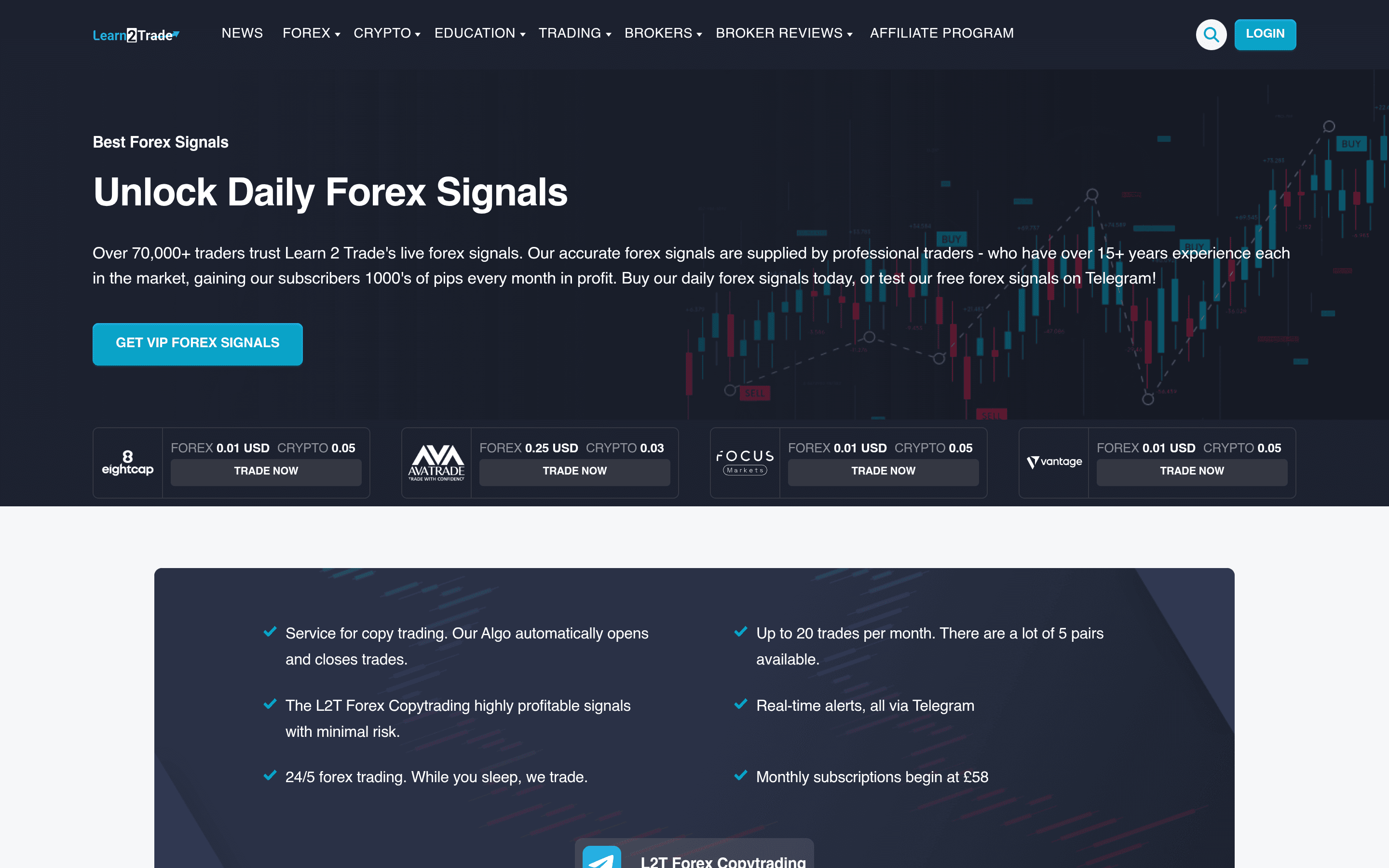
It advertises a headline "76% success rate". We found no independent verification of that figure. Its Trustpilot score is 1.6 from 451 reviews, and the complaints include no Telegram access after paying, refused refunds and support not answering.
The catch: an "amount to risk" is useful, but it is not a lot size worked out for your balance. Fifteen signals a day is also a great deal of decisions for a beginner to make well.
3. FX Leaders: best for seeing the signal format before you pay
FX Leaders is a signals app whose signals carry an entry, a stop and a take-profit, with the entry price unlocked by the premium tier. A one-year in-app subscription costs $149.99 on the App Store listing. The operator is Standard Merchants EMEA FZE, based in Dubai.
On Trustpilot, FX Leaders' TrustScore is suspended for "displaying Trustpilot content in a misleading way". That is Trustpilot's wording, not ours.
The catch: a signal without its entry price is not a signal you can use, so the free tier is best treated as a sample of the format.
4. Forex GDP: best for signals with a chart rationale attached
Forex GDP is a signal service that sends an entry, a take-profit, a stop and a chart showing the rationale, by WhatsApp, Telegram and email. Premium costs $107 a month and Supreme $217 a month, with a 14-day free trial, according to its signals page. Its Trustpilot score is 4.8 from 1,035 reviews.
It claims an "80 to 95% success rate" and links a Myfxbook account. That account has not been audited.
The catch: the rationale is a real strength, and more than most offer. Position size for your balance is not part of the signal as described, so the most dangerous step is still left to you.
5. MQL5 Signals: best for automatic copying with a live-monitored history
MQL5 Signals is a marketplace where traders sell subscriptions to their accounts, and subscribers' trades are mirrored automatically in MetaTrader. Since 15 July 2017, every paid signal must cost $30 a month or more. Account histories are monitored live, which makes this the most verifiable record in the list.
There is no trade plan and no reasoning. The trade simply appears in your account. Its Trustpilot score is 1.2 from 180 reviews.
The catch: you can see exactly what a provider did, but you learn nothing about why, and you copy their worst day along with their best. Our comparison of copy trading against trade plans covers that trade-off in detail.
6. A typical Telegram VIP group: best for watching how others frame trades
A Telegram VIP group is a paid chat channel, usually reached through a free one. The typical funnel, described by JP Trading Capital, is a free channel, then a VIP tier at $50 to $300 a month, or free VIP access if you trade through a partner broker. The same source notes that per-lot commissions reward volume, which is why such channels often "fire 10 to 20 signals a day".
Signals tend to use entry zones and several targets. We took one real gold signal apart line by line in what a Telegram gold signal leaves out. And our guide to what free forex signals really cost explains who pays for the free tier.
The catch: the record is kept by the people selling the service, and the income can depend on how much you trade.
7. Systemly: best for beginners who want a complete plan they can learn from
Systemly (systemly.ai) is the product that publishes this comparison, so read this entry with that in mind.
Systemly is a UK-built forex and gold trade-planning app that turns live price data into a complete trade plan, with entry, stop, targets, position size and plain-English reasoning, and teaches the terms in a built-in academy of 32 courses.
In practice you pick an instrument and press scan, and in under a minute you get either a plan or a statement that there is nothing worth trading right now. A plan gives you one entry price, the stop and the reason it marks the idea as wrong, targets in steps, a position size in lots worked out from the balance and risk percentage you enter, and what would make the trade fail. Deterministic code checks the plan after the AI model drafts it: it enforces a minimum stop width, moves stops away from obvious resting liquidity, recomputes every distance and re-derives the size. Each plan is then tracked: the level it reached, when, and its deepest move against the trade, losing plans included.
There is a free plan, and paid plans add alerts by WhatsApp or Telegram, more plans and execution into a connected MT5 account. Systemly is not a broker and does not take the other side of your trades. The Academy's 32 courses, 123 lessons and 642 graded questions sit in the same app, so the lesson for any term in a plan is in the same place. Browse the public feed of community scans to judge real plans for yourself.
The catch: you do not get a human mentor, the app often says there is nothing to trade, and its record of outcomes is kept by Systemly rather than monitored by a third party the way MQL5 account histories are.
Why is there no win rate on Systemly's pages?
A win rate is the one number you will not find on our site, and that is deliberate. Here is why, using arithmetic anyone can check.
Picture a signal with a target 10 pips away and a stop 30 pips away. The break-even win rate is 30 ÷ (10 + 30) = 75%. Win exactly 75% and the expectancy is 0.75 × 10 − 0.25 × 30 = 7.5 − 7.5 = 0 pips per trade before costs. A 1-pip spread then turns that into a loss of 1 pip per trade. A service with a 75% win rate can lose you money.
The picture gets worse. Assume price wanders at random. The nearer level then tends to be touched first, with a probability of roughly the far distance divided by the total of both. With a 10-pip target and a 30-pip stop, that is about 75%. A trader with no skill at all would "win" three times in four with that shape of trade.
The reverse is also true. With a 30-pip target and a 10-pip stop, you break even at 25%. Win 40% of those trades and the sum is 0.4 × 30 − 0.6 × 10 = 12 − 6 = +6 pips per trade before costs.
A win rate, in short, is meaningless without the two distances behind it. Rather than print a headline figure, we show the whole plan and record what happened to it. You can judge the plan, the distances and the outcome together. Our guide to why "80% win rate" signals mean less than you think goes further, with a checklist for judging any service.
Other kinds of signals worth knowing about
Signal providers are only one source of trade ideas. Three others come up constantly with beginners.
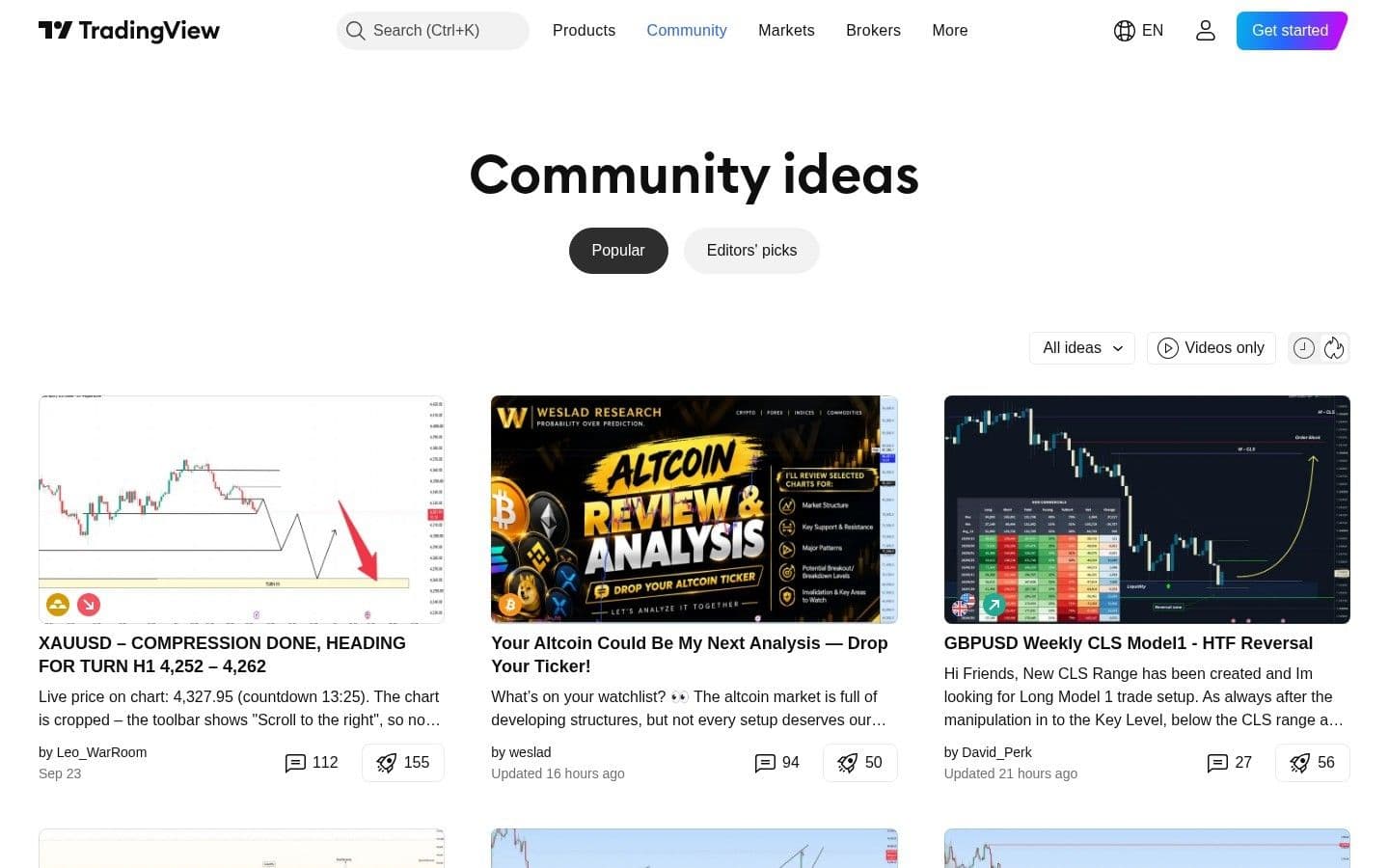
- AI chart apps that read a screenshot of your chart. Our comparison of AI chart analysis apps explains why the input matters.
- ChatGPT, asked directly for a trade. We set out what it can and cannot do in ChatGPT signals vs a purpose-built signal engine.
- Discord groups, often used by people taking prop firm challenges. Read the prop firm copying rule most members never read before you mirror anyone's trades into a funded account.
And behind all of them sit the influencers who send people there in the first place. Our guide to forex gurus and who profits when you lose follows that money.
Where each provider is the better choice
We would rather you picked the right tool than picked ours.
- If you want to learn alongside human traders in real time, ForexSignals.com's trading room offers something an app cannot.
- If you already size your own trades and want a signal with an "amount to risk" and analysis at a modest price, Learn2Trade's format has more fields than most, though its reviews deserve careful reading.
- If you want a visual reason for each trade by WhatsApp, Forex GDP's chart rationale is a genuine strength.
- If the thing you value most is a record nobody can edit, MQL5's live-monitored account histories beat every other option here, including Systemly.
- If you only want to watch how other traders frame ideas, a free Telegram channel costs nothing, provided you do not trade it with real money.
Systemly is the better choice when you want to understand every trade you take, want the size worked out for your own account, and want to learn the terms in the same place.
Before you pay anyone: position size
Whichever provider you choose, the size is your job unless the signal does it for you. A beginner who takes a 30-pip stop at a size meant for a bigger account can lose several percent of their balance on one trade. Risk Doctor is a free tool that checks a trade's risk and position size before you place it. For a step-by-step guide with gold, read position sizing, the part signals leave out.
How we compared
We compared six signal providers and Systemly on eight fields: entry, stop, targets, size for your balance, reasoning, record of outcomes, advertised win rate and Trustpilot score. Prices come from each provider's own page or app store listing, and ratings from Trustpilot, all checked on 24 September 2026. Where our sources did not show a field, we wrote "not stated" rather than guessing. Prices and ratings change, so check them yourself before you subscribe.
Further reading: What makes a forex signal good.
FAQ
Are forex signals legit?
Some signal services are run honestly, but most records are kept by the seller and have not been independently verified. Learn2Trade claims a "76% success rate" and Forex GDP claims "80 to 95%", and we found no independent audit of either. MQL5 is an exception, because account histories are monitored live. Judge any service by what is inside the signal, not the headline percentage.
What are the best forex signals for beginners?
For a beginner, the best signal is one you can understand and size safely. That means an exact entry, a stop with a reason, targets, a position size for your own balance and a record of outcomes that includes losses. Most signal services give the first three. Systemly gives all five as a complete plan, with lessons for each term in the same app.
Do forex signals work?
A signal is only as useful as its stop, target and size. A 75% win rate with a 10-pip target and a 30-pip stop breaks even before costs and loses after a 1-pip spread. Signals can work for traders who already manage risk well, but a high win rate alone does not show that a service makes money.
How much do forex signals cost in 2026?
As of 24 September 2026, Learn2Trade costs £39 a month to £399 lifetime, ForexSignals.com $58 a month or $312 a year at its current 50% discount (list price $116 and $624), Forex GDP $107 or $217 a month, and FX Leaders $149.99 a year in-app. MQL5 signals cost at least $30 a month each. Telegram VIP groups typically charge $50 to $300 a month, or are free through a partner broker.
What is the difference between a forex signal and a trade plan?
A signal gives a direction and some levels. A trade plan adds the position size for your balance, the reason for the stop, targets in steps, what would make the trade fail, and a record of what happened afterwards. A plan lets you judge and learn from the trade. A signal only lets you follow it.
Why is there no win rate on Systemly?
The omission is deliberate. A win rate without the distances to target and stop can mislead, because a 10-pip target with a 30-pip stop would be hit about 75% of the time even at random. Instead of a headline figure, Systemly shows each complete plan and records which level price reached, when, and how far it went against the trade first, including losses.
See what a complete plan contains
Compare the signals you receive now with a full plan. Browse the community scans or start with Systemly's free plan and put the fields side by side.
Sources
- ForexSignals.com pricing: https://traderoom.forexsignals.com/pricing
- Learn2Trade signals and prices: https://learn2.trade/forex-signals
- Learn2Trade on Trustpilot: https://www.trustpilot.com/review/learn2.trade
- FX Leaders on the App Store: https://apps.apple.com/us/app/forex-signals-live-fxleaders/id1101456366
- FX Leaders on Trustpilot: https://www.trustpilot.com/review/fxleaders.com
- Forex GDP signals and prices: https://www.forexgdp.com/forex-signals/
- MQL5 minimum signal price: https://www.mql5.com/en/forum/204680
- MQL5 on Trustpilot: https://www.trustpilot.com/review/www.mql5.com
- JP Trading Capital, the Telegram free-to-VIP funnel: https://www.jptradingcapital.com/blog/en/free-forex-signals-telegram
- Systemly community scans: https://app.systemly.ai/scans
- Systemly Risk Doctor: https://app.systemly.ai/tools/risk-doctor
Trading forex and CFDs carries a high risk of losing money, and most retail accounts do. Systemly is an educational and trade-planning tool. It does not provide financial advice or personal recommendations, and it is not authorised by the FCA to do so. Past outcomes do not predict future results.