Community
Trading insights, strategy breakdowns and educational content written by traders who have been through it.
The Strat reduces every candle to one of three objective scenarios. This quick quiz checks whether you can spot them and read how they combine into real setups.
A quick check on the stochastic momentum index: what it measures, why its line is smoother, how to read its levels, crossovers and divergences, and its honest limits. Answer each question, then read the short note to lock the idea in.
A quick check on how a currency strength meter really works: what it measures, how it is built from the 28 major crosses, how to pick pairs with it, and where it quietly misleads you. Answer each question, then read the short note to lock the idea in.
A quick check on the stochastic momentum index: what it measures, how to read its signals, and where a smoother line just means a slower one. Answer each question, then read the short note to lock the idea in.
A quick check on how VWAP works: what it measures, how to read it, the two honest ways to trade it, and where it quietly falls apart. Answer each question, then read the short note to lock the idea in.
Forex runs around the clock during the week, but not every hour is worth trading. This short quiz checks how well you can tell the busy, tradeable sessions from the quiet ones, all in UK time.
A quick check on using Fibonacci retracement with discipline: what the levels are, which ones matter, how to enter around them, and the overfitting trap to avoid. Answer each question, then read the short note to lock the idea in.
A quick check on supply and demand trading: what a zone really is, how to tell a strong one from a decorative box, and how to enter with confirmation instead of hope. Answer each question, then read the short note to lock the idea in.
A quick check on continuation patterns: how flags and pennants form, how to set a measured-move target, and where the trade is simply wrong. Answer each one, then read the short note to lock the idea in.
A quick check on the classic reversal patterns: how a head and shoulders is built, when a double top actually confirms, and the honest ways these shapes fail. Answer each question, then read the short note to lock the idea in.
A quick check on the candlestick patterns that actually matter: what a hammer really is, why location beats shape, and why the engulfing candle carries the most weight. Answer each question, then read the short note to lock the idea in.
A quick check on the Wyckoff cycle: what accumulation and distribution are, the events that mark each turn, and the honest limits of the method. Answer each question, then read the short note to lock the idea in.
A quick check on how fair value gaps work: what leaves the imbalance, how to read one across three candles, and the honest limits of trading it. Answer each question, then read the short note to lock the idea in.
A quick check on the chart patterns worth knowing: the two families they belong to, what confirms a break, and why volume and context matter more than the shape alone. Answer each question, then read the short note to lock the idea in.
A quick check on how liquidity really works: what it means, where it pools above highs and below lows, and how sweeps and stop hunts play out. Answer each question, then read the short note to lock the idea in.
A quick check on the core ideas behind ICT trading: liquidity, market structure, order blocks and fair value gaps, plus an honest look at which parts hold up. Answer each question, then read the short note to lock the idea in.
A quick check on the core ideas behind smart money concepts: market structure, liquidity, order blocks and the honest limits of the approach. Answer each question, then read the short note to lock the idea in.
Why free forex signals exist, who is actually paying for them, and what to check before you follow one, plus how to get signals with full reasoning and tracked outcomes at no cost.
A fair, feature-by-feature comparison of Systemly and ChartAnalyst.ai for forex and gold traders, including where each tool genuinely fits and where it does not.
A forex signals Telegram group hands you five numbers and no reasoning. Here is what that costs you over a year, and what a signal has to carry if it is going to teach you anything.
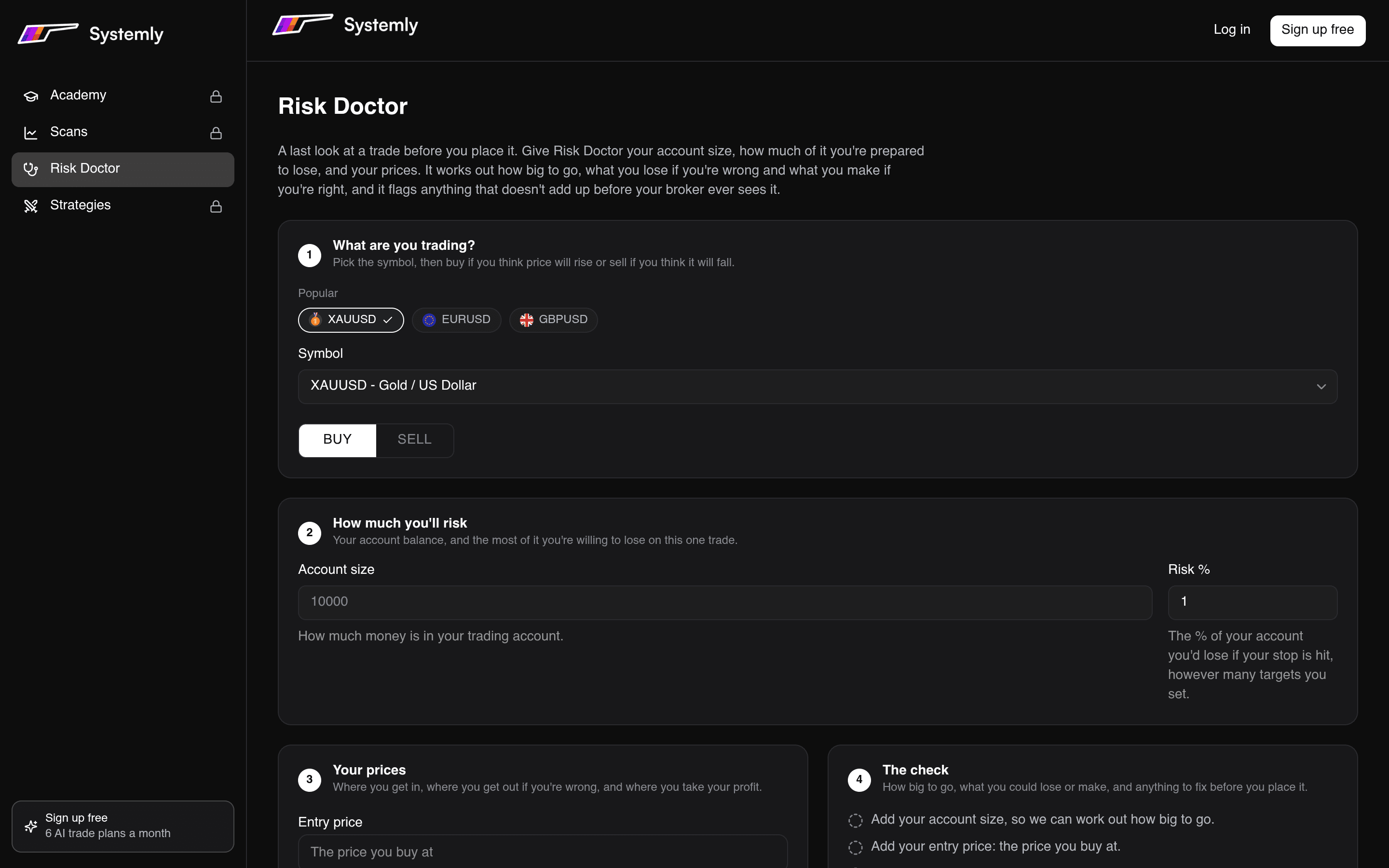
A forex profit calculator does more than turn pips into cash. Here is how to project the result at every take profit level, read it in R rather than pounds, and allow for the costs the calculator ignores.
How to choose an AI trading platform in 2026 by the job you need doing: scanning, analysis, execution or risk. Four categories, assessed honestly, with no win-rate claims.
A risk-reward calculator gives you a ratio in two seconds. The number that decides whether you make money is the win rate that ratio requires, and how much you risk per trade when the streak comes.
A rule-based gold trading strategy built around how XAU/USD actually moves: bias, sessions, volatility-based stops, position sizing and exits, with the failure modes named honestly.
A forex margin calculator tells you what a position ties up, not what it can cost you. Here is how margin and leverage actually work, what UK retail traders are capped at, and why the two numbers get confused.
A forex lot size calculator turns your account balance, risk percentage and stop distance into the volume to trade. Here is the maths behind it, with worked examples on majors and gold.
Most forex signal providers ask you to trust a screenshot. Here is a seven-point checklist for judging one before you pay, and the two answers that should end the conversation.
A XAU/USD signal is four numbers and an arrow unless it comes with reasoning, correct sizing and a tracked outcome. Here is how to read gold signals properly and what to ignore.
What forex trading signals are, how they are produced and whether they work, with a checklist for judging any signal on reasoning, invalidation, sizing and tracked outcomes.
Gold is not just another pair with a bigger range. Here is how XAU/USD actually behaves, which sessions matter, and how to size a gold trade so the volatility does not size it for you.
AI chart analysis tools read a screenshot and return a trade plan. They are fast, cheap and genuinely useful, but the image is a ceiling. Here is where that ceiling sits and why it matters most at extremes.
AI scalping explained honestly: where scalp trading AI genuinely helps, where latency and slippage still bite, and the cost arithmetic that decides the whole thing.
What separates a good forex signal from a hopeful one: verified records, published reasoning, honest losses and correct sizing, with a fair look at what the leading providers offer.
Confluence in trading means only taking a setup when several independent factors agree. Here is the six-part checklist, how many confluences you actually need, and the double-counting trap to avoid.
A forex position size calculator turns your risk percentage, stop distance and pip value into a lot size. Here is the method, with worked examples on EUR/USD, USD/JPY and gold.
What a pip actually is, and how a forex pip calculator turns it into money: pip value across dollar pairs, yen pairs and gold, with worked examples and the arithmetic shown.
Multi-timeframe analysis lets a higher chart set your bias and a lower chart time the entry. Here is how to run a top down read, which timeframes suit your style, and where the method goes wrong.
A currency strength meter ranks the major currencies against each other. Here is what it actually measures, how accurate the reading really is, and how to combine relative strength with structure for better pair selection.
The Strat method explained clearly: the three candle scenarios (inside, directional and outside bars), how they combine into setups, timeframe continuity, and where the method genuinely helps versus where it is overstated.
What VWAP means, how to read it, and the two honest ways intraday traders use it, plus why the volume weighted average price needs more caution in forex.
The stochastic momentum index explained clearly: what the SMI measures, how it is calculated, how to read its signals, and how it compares to the classic stochastic.
Forex market hours explained in UK time: the four trading sessions, the London to New York overlap that carries the most volume, and how to pick your hours around the way you trade.
Supply and demand trading made practical: what a zone really is, how to tell a strong one from a decorative box, and how to enter with confirmation instead of hope.
How to use Fibonacci retracement with discipline: what the levels are, which ones matter, how to place an entry, and how to avoid fitting the tool to the past.
Flags and pennants are among the most reliable continuation patterns, when you trade the right ones. How to spot a bullish flag or a pennant, set a measured-move target, and know exactly where the trade is wrong.
How to trade the classic reversal patterns: the head and shoulders, inverse head and shoulders, double tops and double bottoms, with clear entries, stops, measured targets and the honest failure cases most guides skip.
What a fair value gap is, how to spot one and how to trade it, with clear examples and an honest look at when FVGs fail.
The Wyckoff method explained as one cycle: accumulation, distribution and the phases between, with the volume and structure clues that actually matter.
The candlestick patterns worth knowing, ranked by reliability and shown in context: how to read the hammer, hanging man and engulfing candle, and when each one is actually worth trading.
A practical guide to the chart patterns worth knowing, grouped by what they signal: reversal, continuation and how to trade the break with context and volume.
Liquidity, pools, sweeps and stop hunts explained with real price examples, so you can see where smart money is likely to act and why.
A plain-English guide to ICT trading: liquidity, market structure, order blocks and fair value gaps, with an honest look at which parts of the Inner Circle Trader method actually hold up.
A plain-English guide to smart money concepts: market structure, liquidity, order blocks and a repeatable SMC checklist you can actually trade.
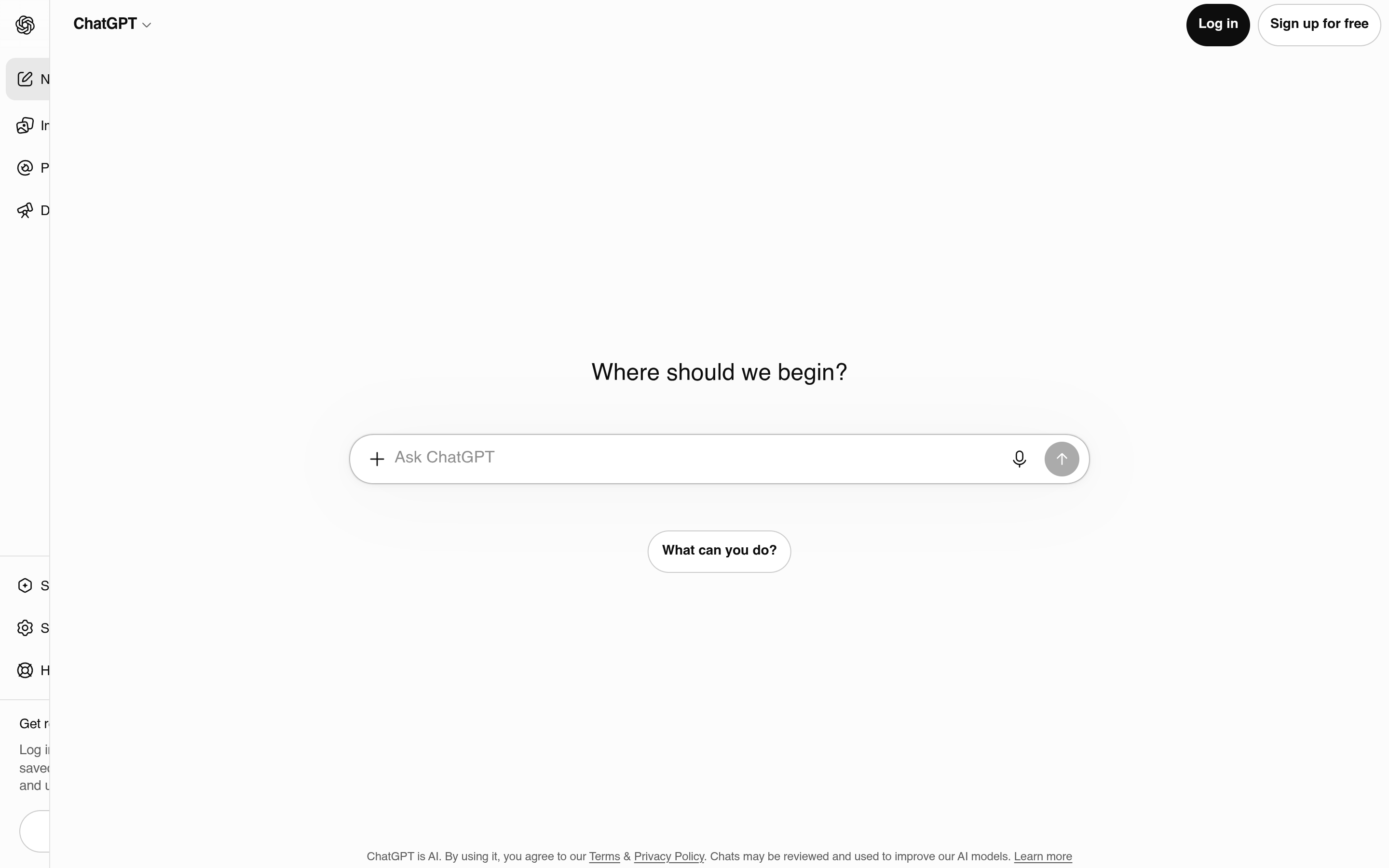
ChatGPT forex trading, judged fairly: what an AI tutor explains well, where it invents prices, and how to pair it with a graded trading academy.
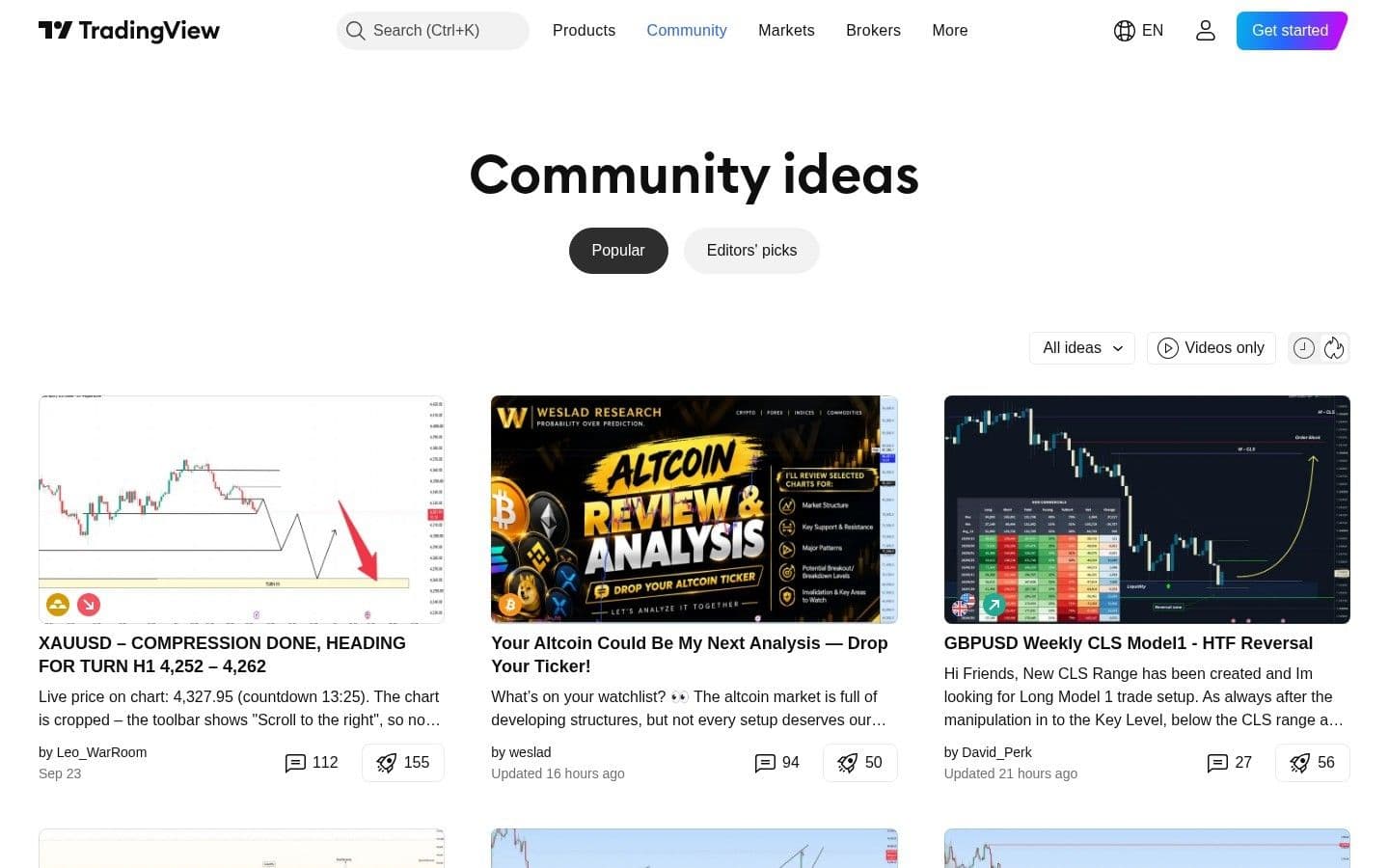
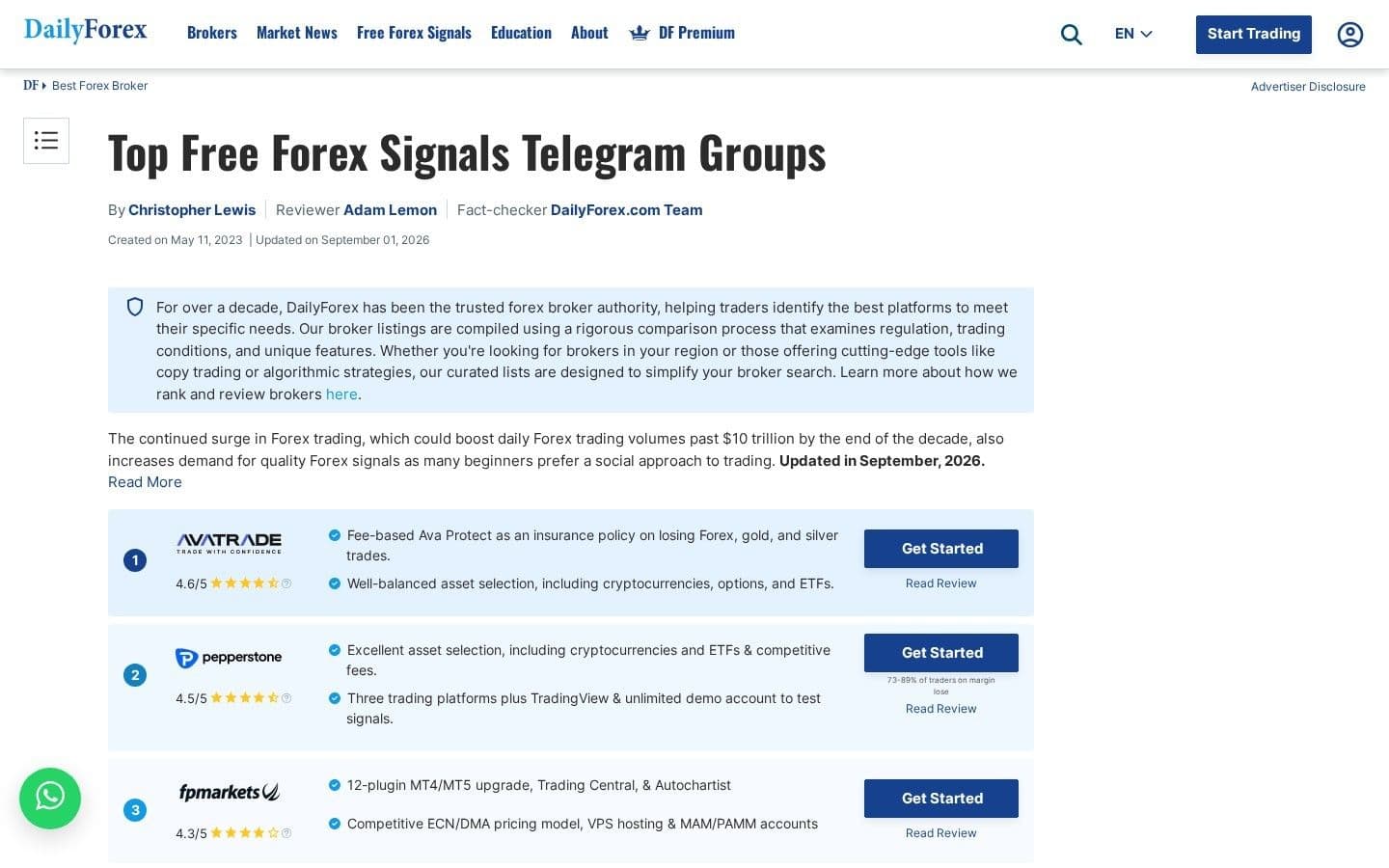
Free forex signals are paid for by someone. See who funds free Telegram channels, TradingView ideas, broker tools, ChatGPT and Systemly's free plan.
The best BabyPips alternative depends on what you need. Nine sites like BabyPips, ranked on whether they teach you to use a term in a real trade.
Discord forex signals cost $39.90 to $99 a month. Before you copy one into a prop firm challenge, read the copying rule at FTMO, FundedNext and others.
Gold signals on Telegram give a zone, a stop and two targets. We take apart a real XAUUSD signal and show what a complete trade plan adds.
IG Academy review for UK beginners: what IG Academy, eToro Academy and Investmate do well, who earns when you trade, and the independent alternative.
The best app to learn trading for beginners, tested on six questions: can you fail, are mistakes reviewed, who owns it, and the real weekly price.
A gold lot size calculator, worked by hand: how much to risk per trade, why 0.00734 lots rounds to 0.01, and what that rounding does to your real risk.
Can you learn forex on YouTube or TikTok? Yes, with care. What 1,764 finance videos showed, the hidden costs of free, and how to use YouTube well.
The best forex signals compared field by field: entry, stop, size, reasoning, outcomes, price and ratings for 6 providers and Systemly, checked Sept 2026.
How to learn forex trading as a beginner when theory is not enough: why courses stall, how a trade plan maps to lessons, and a 30-day learn-by-doing plan.
Can ChatGPT trade forex? What it misses when you ask for a gold trade (live prices, lot size, a record) and how a purpose-built plan checks its work.
Is BabyPips worth it after the rise to $29 a month? What is still free, what went behind the paywall, and how it compares with Systemly's graded academy.
Are forex courses worth it? We compare the cost of 8 popular trading courses, from $10 on Udemy to $4,999, and what each one makes you practise.
Is copy trading profitable? We compare eToro CopyTrader, ZuluTrade and Myfxbook AutoTrade with trade plans on cost, records, sizing and what you learn.
ICT trading concepts in plain English. The free 2022 mentorship, YouTube summaries and a graded smart money course compared, checked September 2026.
Are forex signals reliable? Why a 75% win rate can still lose money, the maths in plain steps, and a 12-point checklist for judging any signal service.
The best way to learn forex trading in the UK in 2026: free courses, paid courses, YouTube, broker academies, AI tutors and learn-by-doing apps, ranked.
Forex gurus earn from VIP groups, courses and broker rebates. We follow the money, cover the FCA sentences and compare a tool that shows its working.
An AI chart analysis app that reads a screenshot sees a picture, not the data. We compare TradeGPT, ChartsGPT, Chart AI and ChartAI with a data-first plan.
Start your journey with Systemly and connect with traders who take their craft seriously.